← All projects

Residential · Loft Conversion

Loft Conversion — Clayhall, London

A full-width dormer conversion to a 1930s terraced home — turning empty roof space into two new bedrooms and a bathroom, finished in hanging tiles that quietly continue the language of the existing house.
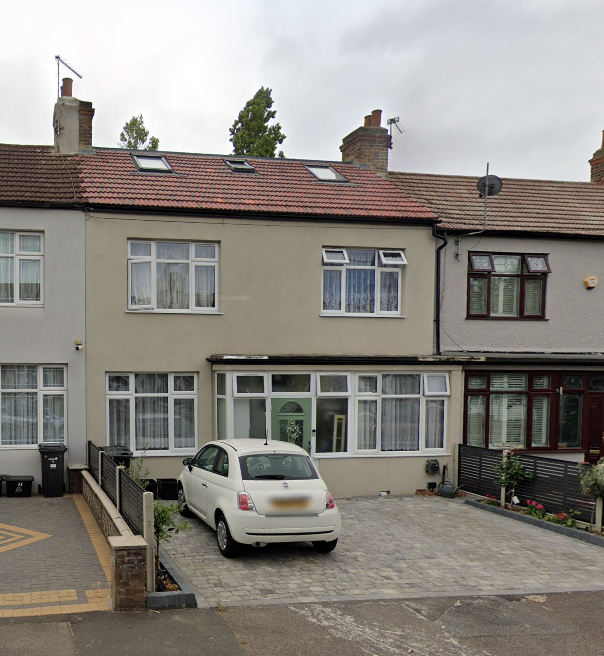
The existing 1930s terraced house from the street, before works
The house as found — front elevation entirely preserved by the proposal.

Location

Clayhall, London

Property

1930s mid-terrace

Scope

Full-width dormer loft conversion

Status

Designed & submitted

The brief

An empty loft, two bedrooms short.

A growing family needed two more bedrooms and a second bathroom — but didn't want to leave the street, the school catchment, or the house they already loved.

The answer was up. The roof above their heads was generous in volume but completely unused, accessed only by a small ceiling hatch. The brief: convert it into proper, full-height living space — and make the new dormer feel like part of the original architecture, not stuck on top of it.

Loft plan
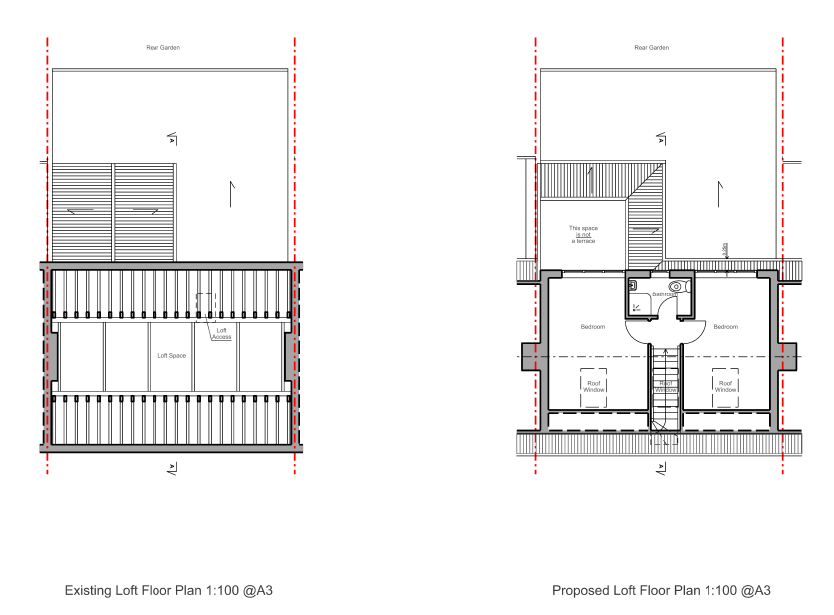
From storage to a small floor of its own.

  • · Two new bedrooms, side-by-side under the new dormer.
  • · A compact bathroom centrally placed beside the staircase.
  • · A proper staircase rising from the existing landing — no more loft ladder.
  • · Roof windows to the front to keep the street view soft.
Existing loft floor plan and proposed loft floor plan side by side
Existing (left) & proposed (right) loft floor plans, 1:100.

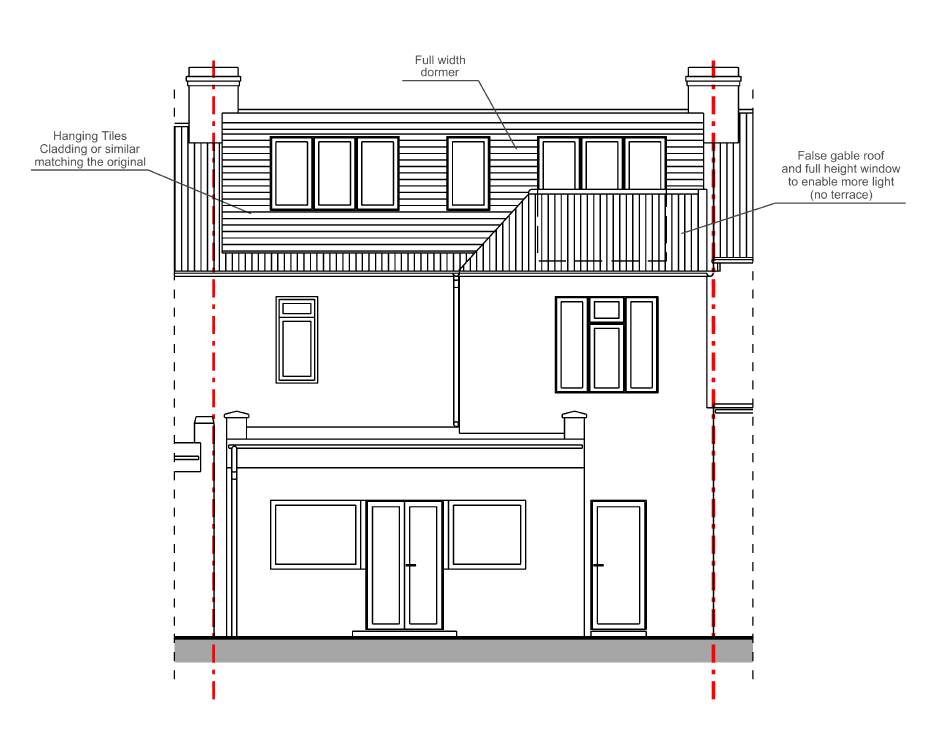
Rear elevation

Continuing the house, not interrupting it.

  • · Full-width rear dormer for maximum floor area at full ceiling height.
  • · Hanging tile cladding chosen to match the texture and rhythm of the original facade.
  • · A false gable with a full-height window brings extra light deep into the loft (no terrace, no overlooking).
  • · Front roofline left untouched — change is only visible from the rear garden.
Proposed rear elevation drawing showing full width dormer with hanging tile cladding and false gable
Proposed rear elevation, 1:100 — annotated with material strategy.

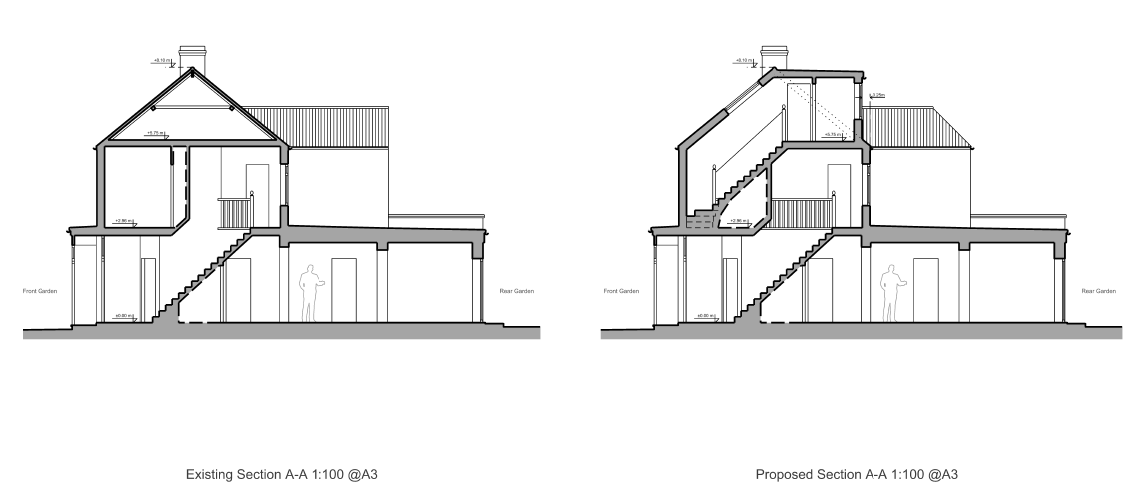
Section

Before and after, in one cut.

  • · Existing roof: traditional dual-pitch with a small unusable loft volume.
  • · Proposed roof: rear dormer absorbs the back slope, freeing up the entire loft floor at full standing height.
  • · New stair lands cleanly on the existing first-floor landing, with no loss of bedrooms below.
  • · Ridge height held to no higher than the existing roof — the silhouette from the street stays intact.
Existing and proposed sections side by side showing the loft conversion
Existing (left) & proposed (right) section A-A, 1:100.

In summary

"The best loft conversions don't add a storey — they reveal one that was already there."

Could your loft do more?

Most London terraces have a usable extra floor hiding under their roof. We'll tell you honestly whether yours is one of them.